Author: Kevin


How High Should a Telescope Pier Be? Telescope Pier Height
You can quickly decide the telescope pier height by using the following method. P= A-B, Where: P= Pier Height A= Observatory wall height B= Position your OTA horizontal. You can get this the same way you do when adjusting your counterweight balance. Determining the telescope pier height is one of the most controversial when setting…
What is Flocking a Telescope?
Flocking is the process of applying an adhesive, fuzzy flock material to telescope optical surfaces. The goal is to improve contrast and reduce light scattering by the flocking material. When flocking a telescope, you want to be sure that the flock is not too thick. It should be applied thinly and evenly, making a smooth…
How to Clean a Telescope Mirror Using Alcohol
After proper dusting, your telescope mirror surface, spray the solvent (alcohol). You can either opt to use a tissue or cotton to wipe off the solvent. However, for proper cleaning, lay the tissue across the mirror and pour a little solvent on it. It will stick to the mirror through surface tension, and you will…
How to Autoguide Telescope without a Computer
Autoguiding a telescope without a computer is possible by the use of Stand-Alone Guiders. You can also opt for the DSLR which has the capability of performing an auto-guide without the help of a computer. The auto-guide is advantageous for making photography on target objects simpler, especially when you have deep-sky objects that are too…
How to Grind a Telescope Mirror in 10 Easy Steps
There is a question on whether to build or buy a telescope mirror amongst most astronomers. The whole deal is not about saving a few dollars. But instead, making your mirror will cost you more than you would spend buying the instrument. You probably have to spend a lot of hours creating it. However, most…
What are the Differences Between a Powermate and a Barlow?
A Powermate lens consists of 4 optical elements: negative doublet followed by positive doublets. Meanwhile, a Barlow lens contains 2 or 3 optical elements: achromatic negative doublets. The negative doublets configure to give in diverging rays that stretch out the light cone of the Barlow, thus giving a double or more magnification. This article gives…
Reflector vs. Refractor Telescope Pros and Cons
Anyone venturing into astronomy or astrophotography should understand reflector vs. refractor telescope pros and cons. Both telescopes have their uses and strengths that make them ideal for exploring the sky. Understanding the pros and cons of each telescope will help you decide which one is most suitable for your needs. Reflector and refractor telescopes are…
How to Make a Flat Frame Lightbox for Astrophotography?
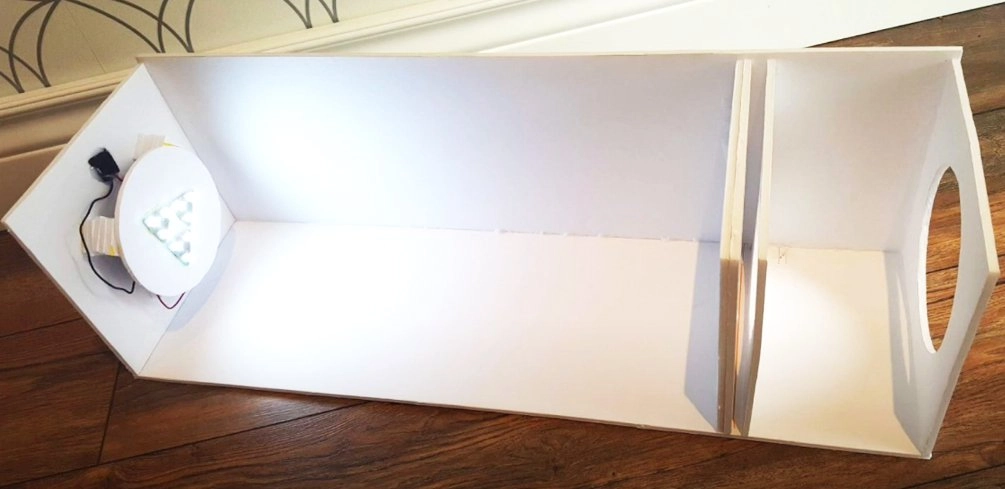
Did you know you can make an astrophotography flat frame lightbox with the following simple steps? Although astrophotography is a complex subject, you shouldn’t have to buy expensive accessories for your telescope. You can make a flat field box with the simple steps above and produce images with even lighting. I have compiled all the…
Can you Polar Align without Polaris?
Yes. You can polar align a telescope’s polar axis without having a visual on Polaris. Use the following steps to adjust for polar alignment without Polaris. It is tough to align your polar axis without seeing the North Celestial Pole, but you can do it closely. It would be best if you were patient with…